Zero Tolerance and Taking the Easy Way Out - Monday, June 29, 2009  If there is one area of law that has changed more than any other through the years, it is juvenile law. And I don’t mean change in terms of legal definitions or statutes, I’m talking about change in terms of societal perception and treatment. If there is one area of law that has changed more than any other through the years, it is juvenile law. And I don’t mean change in terms of legal definitions or statutes, I’m talking about change in terms of societal perception and treatment.
When I was a kid if someone got into trouble at school they were dealt with by adults entrusted with the power to investigate and respond accordingly - Adults with the wisdom to evaluate a situation and discipline a child if necessary. A coach might order someone in gym class to do pushups, have a student run laps around a field, or even whack a behind with a paddle. Teachers might give additional homework, write a letter to a parent, or send a child to the principal’s office. Principals might reprimand a student, expel them, or send them home to face their parents. Parents might ground their child or levy additional chores. Whatever the response, adults in charge could exercise discretion when deciding what discipline, if any, should be administered. Police interrogations, strip searches, and criminal charges were a last resort. Now, investigative measures and disciplinary actions are, more often than not, pre-determined. Now there is zero tolerance. On October 8, 2003, thirteen year-old Savana Redding was strip-searched while at school. Savana was an honor student who had never been in trouble before. Even so, because of an unsubstantiated allegation that she had brought drugs to school, authorities felt compelled to search her. First, she was forced to take her outer clothing off. A male vice-principal and female school nurse inspected her jacket, t-shirt, pants, shoes, and socks. When nothing was found she was told to pull her bra to the side, exposing her breasts, and shake it out. Still nothing. Finally, she was made to expose her pelvic area by pulling the crotch of her underwear out to see if any drugs had been hidden there. Nothing was found. During this process Savana continued to express her innocence. She never consented to the search and her parents were not contacted. What kind of dangerous drug would justify such an evasive search? What were they looking for? Advil.  Parents need to realize that student behavior, which in the past, would have been handled by the school - or better yet, the parents - is now, more often than not, pursued according to pre-determined directives and turned over to law enforcement. Criminal charges are filed and must be dealt with. One kid pushes another kid and assault charges are filed. A child sprays deodorant in a locker room, sets off a smoke alarm, and is charged with a felony. A kid who writes “bomb” on an empty envelope as a joke then makes the mistake of leaving it on top of a trashcan, is charged with terroristic threat. The list goes on and on. Don’t get me wrong - it’s easy to see how we got here. It’s a frightening new world with kids taking guns to school to exact revenge for perceived persecutions, joining gangs in order to feel tough and protected, self-medicating via prescriptions found at home or drugs purchased on the street. Terrible crimes occur in school these days that shock all of us. We have to do everything possible to ensure the safety of our children. Parents need to realize that student behavior, which in the past, would have been handled by the school - or better yet, the parents - is now, more often than not, pursued according to pre-determined directives and turned over to law enforcement. Criminal charges are filed and must be dealt with. One kid pushes another kid and assault charges are filed. A child sprays deodorant in a locker room, sets off a smoke alarm, and is charged with a felony. A kid who writes “bomb” on an empty envelope as a joke then makes the mistake of leaving it on top of a trashcan, is charged with terroristic threat. The list goes on and on. Don’t get me wrong - it’s easy to see how we got here. It’s a frightening new world with kids taking guns to school to exact revenge for perceived persecutions, joining gangs in order to feel tough and protected, self-medicating via prescriptions found at home or drugs purchased on the street. Terrible crimes occur in school these days that shock all of us. We have to do everything possible to ensure the safety of our children.
But aren’t we just taking the easy way out with zero tolerance? A child’s life is so difficult these days, and I fear we are just making it tougher, albeit in the name of safety and a child’s best interests. A child is given no leeway to exercise poor judgment and make the stupid mistakes of childhood without grave consequences. An adult, meanwhile, can avoid making a mistake of judgment altogether by merely turning to zero tolerance. So much easier than weighing the facts and using common sense! We're saying, "It doesn’t matter that you are a child and do not know better, I will not burden myself with personal judgment regarding the situation and run the risk of making a decision that others might not agree with. Zero tolerance will make my decision for me."  Last week the Supreme Court found the search of Savana Redding to be unconstitutional. “Outrageous” was the term used to describe the school official’s actions. But I fear zero tolerance is here to stay in one form or another. A school official faced with the decision of how far to go when dealing with a child’s apparent misbehavior will almost certainly err on the side of caution and avoid the danger of subjective discretion. Whether violating a child’s constitutional rights in an effort to procure evidence or deciding to press criminal charges, caution will be the driving factor, not tolerance. When in doubt, search the child, call the authorities, and file the charges. Last week the Supreme Court found the search of Savana Redding to be unconstitutional. “Outrageous” was the term used to describe the school official’s actions. But I fear zero tolerance is here to stay in one form or another. A school official faced with the decision of how far to go when dealing with a child’s apparent misbehavior will almost certainly err on the side of caution and avoid the danger of subjective discretion. Whether violating a child’s constitutional rights in an effort to procure evidence or deciding to press criminal charges, caution will be the driving factor, not tolerance. When in doubt, search the child, call the authorities, and file the charges.
I think about this every time I’m confronted by an upset parent who doesn’t understand why their child has suddenly become involved in the juvenile justice system. Why is my child being treated like an adult criminal? Why have criminal charges been filed just because my child got into a schoolyard fight or had ibuprofen in his pocket? It’s hard to understand. Shouldn’t they, as parents, be given the opportunity to discipline their child without such drastic measures being taken? That’s when I remind them that the world has changed. That there was a time when a kid could act like a kid and be treated like a kid, but unfortunately… those days are long gone. Labels: juveniles, public perception, taking the easy way, zero tolerance
posted by Dal
permalink
 
DWI Court Graduation and The Role of the Defense Attorney - Monday, June 29, 2009 
I just read Raman's post on The National Network for Safe Communities and couldn't agree with her more. Reading it, I reflected on this week's DWI Court graduation ceremony. I am one of two defense attorneys in Travis County's DWI Court - an innovative program which serves people arrested for multiple DWI's by "providing an intensive, judicially supervised program of team-based counseling, treatment, and supervision."
My participation in this court is quite different from my work in "regular" court - rather than working from the traditional adversarial approach, the DWI Court works as a team. Before our Court sessions, the team - consisting of the Judge, Probation, County Attorney, Alcohol Counselors, and Defense Attorney - meets to discuss each participant and their recovery. We problem-solve together and often disagree amongst ourselves, but in the end come up with agreed-upon solutions to help each participant in their recovery.
Even through the team approach, we still function in a "defense attorney" role - as the National Drug Court Institute warns, "It is essential that defense attorneys remain vigilant in protecting civil liberties - even in the relatively nonadversarial context of drug court." That is why I agree with Raman that there should be defense attorneys involved in this new program that could be a great solution to reducing crime and incarceration.
Anyway, as I said, her post made me reflect on this week's graduation ceremony. I must admit that this was the first time that I truly "got" just what makes this court different. Listening to one of the graduates - an older man who had spent many decades addicted to alcohol - speak about how the Court truly changed him was humbling. "I feel like I've just graduated kindergarten and am going into the first grade of life," he said. Not only does the court provide an alternative to incarceration, it can be a springboard into a whole new life.
Labels: dwi, DWI Court, innovative tactics, the role of defense attorneys
posted by Kristi Couvillon
permalink
Perry's Nonsensical Vetoes - Friday, June 26, 2009  I am still trying to recover after learning that Governor Perry vetoed some of the only good criminal justice bills that made it through the legislative gauntlet this session (after hundreds of bills died in the House due to the controversy surrounding voter ID). Few, if any, lawmakers voted against the bills that Perry killed and it is beyond frustrating that one person has this much power: I echo the sentiments of Senator Wentworth's vent: I am still trying to recover after learning that Governor Perry vetoed some of the only good criminal justice bills that made it through the legislative gauntlet this session (after hundreds of bills died in the House due to the controversy surrounding voter ID). Few, if any, lawmakers voted against the bills that Perry killed and it is beyond frustrating that one person has this much power: I echo the sentiments of Senator Wentworth's vent:
"There's no check on the governor's power to veto bills that have been through an entire process," said Sen. Jeff Wentworth, a Republican from San Antonio who represents part of southern Travis County. "When senators and representatives from all 254 counties overwhelmingly — in some instances, nearly unanimously — pass legislation that's been through a really tortuous path to get to his desk, for the governor to veto it seems a bit unusual," Wentworth said.
So much for the democratic process.
The bills I am most upset about are the expunction bill and the sex offender de-registration bill.
The expunction bill would have made it easier to for those who have had their cases dismissed, or were arrested but were not charged with a crime, to expunge their records. This would have been an amazing opportunity for people who have had their cases dismissed (or not filed!) to move on with their lives without having a criminal record following them around.
Texas Criminal Defense Lawyers Association, along with many other groups, proposed the change because current law imposes lengthy time limitations (and in some case, no time limitations) on being able to file for an expunction after a case has been dismissed. For example, I have two clients that were falsely accused of sexual assault that are unable to have their records expunged under current law because there is no statute of limitations for that offense. Sorry, looks like those false sexual assault charges are going to have to follow two innocent men around at least two more years until next session! And sorry to the thousands of innocent Texans who are going to continue to be harmed with a criminal record that will make it even harder for them in these tough economic times to find jobs, housing, etc.
And Governor Perry's official veto statement as to why he vetoed a bill that had bi-partisan support and passed unanimously out of the House and Senate is nonsensical: "Expunction statutes should not be used as a means of discovery or as a means to force a prosecutor to rush to file formal charges prematurely." What??? Expunction statutes have never and would never be used as a means of discovery - what we want when we are seeking to expunge records is a destruction of those records, not a request to get offense reports. In addition, prosecutors must only have probable cause to file formal charges against someone - and every defense attorney knows how difficult a time a prosecutor has persuading a grand jury on that!
The sex offender de-registration bill was a very narrowly tailored bill that would have offered some relief to young "offenders" who could petition the court for an exemption from life-time sex offender registration for consensual sexual activities if they were within four years of the "victim." Under current law, a 17 1/2-year old who has consensual sex with his 14-year old girlfriend (or a 19 year old with a 15 year old or a 20 year old with a 16 year old) is guilty of sexual assault. That person, if convicted, has to register as a sex offender for life just the same as someone who commits rape or makes child pornography.
What we are talking about here under this bill would have been to allow those teenagers in "Romeo and Juilet" situations to petition the court (and this would have been permissive - not mandatory) to excuse them from a lifetime of sex offender registration for consensual sex as long as they were within four years of the "victim". (And as long as the "victim" was 14 or older.)
And Perry's reason for the veto: "I believe the bill fails to adequately protect young victims." First, the "young victims" Perry refers to are the teenagers who had consensual sex with partners four years older than they were - how does not making those "offenders" register for life in the same way that dangerous predators do "fail to adequately protect" them? Got me. And more importantly, what about the "young victims" out there that will be harmed because our limited public safety resources will be diverted and wasted on monitoring thousands of people on the sex offender registry that pose absolutely no public safety threat? (Not to mention those "young victims" - the "offenders" - who now have no relief from a life-time of living publicly as a sex offender.)
You can probably guess that I am not normally a huge Republican backer, but here's to Kay Bailey Hutchison (or really, anyone but Perry... ANYONE - Kinky Friedman? Leslie Cochrane? Kermit the Frog?) for 2010.

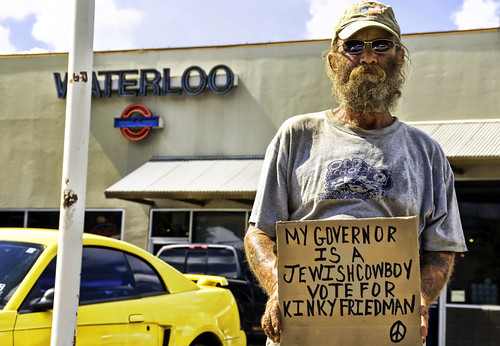
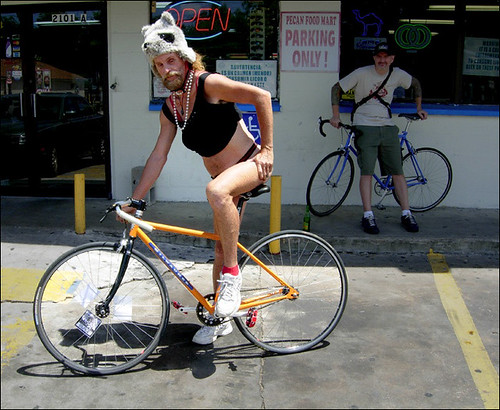
 (Flickr images via bludgeoner86, d. jones photo, stuck in customs, faster panda kill kill, lovebrkthru) (Flickr images via bludgeoner86, d. jones photo, stuck in customs, faster panda kill kill, lovebrkthru)
Labels: expunctions, governor perry, kay bailey hutchison, kinky friedman, leslie cochrane, politics, sex offender registration, texas gubernatorial election 2010, texas legislature, texas republican primary
posted by Kristin Etter
permalink
Unorthodox Measures Come With New Risks - Wednesday, June 24, 2009 By Raman Gill
I was struck by a recent article in the Wall Street Journal on The National Network for Safe Communities, which is, essentially, an intervention program for future violent criminals. Much like substance-abuse interventions, the target (yes, target) is confronted and told that he must stop his offensive behavior. I call them targets because that's exactly what they are--targets of criminal investigations: Under the project, law-enforcement officials and prosecutors in the cities identify individuals operating in violent-crime areas who haven't yet committed serious violent crimes, and build cases against them, including undercover operations and surveillance. The culmination is a "call in" when the case is presented to the would-be suspect in front of law enforcement, community leaders, ex-offenders and friends and family."The prosecutor talks to them and lets them know: 'we could arrest you now but we won't because the drug dealing stops today, the violence stops today,'" said Jeremy Travis, president of John Jay. "If you continue, you now know the consequences and you've seen the case against you but we don't want to send you to prison." Here's the thing: Where's the defense attorney in all of this? I know, I know--there's no arrest, no case to defend against. No need for a defense attorney, right? But is there some sort of agreement about how statements and admissions that the target makes during these interventions are going to be used if - gasp! - the target reoffends? Can statements and admissions made during these "call-ins" be used against the target in future prosecutions? Because I'm guessing that, just like drug addicts who often have to go through rehabilitation many times before it sticks, a good number of people who've been regularly "operating" in high-crime areas don't stop doing so after one intervention. I don't mean to be hyper-critical. Really, I don't. Instead of seeing these folks as targets of criminal investigations, they could easily be seen as recipients of a second chance. Not to mention that similar programs implemented in Boston, MA and High Point, NC in the 1990s significantly reduced homicide rates, which is fantastic. And we should all applaud prosecutors and law enforcement officials who are genuinely more interested in reducing crime than winning convictions and putting people in prison. But still, it bothers me. I often find that defense attorneys are not included in projects and initiatives that focus on public safety. And that's really too bad, not only because initiatives like this might be skating a very fine line in terms of observing fundamental rights, but also because defense attorneys are sometimes in the best position to help offenders comply with the law. What? Aren't defense attorneys the people in the system who help offenders "get away with it?" That's certainly one way of looking at it. But here's another: The defense attorney is the one person in the system whose undivided loyalty is to the accused. This means, in an ideal situation, that there is a solid relationship of trust between the accused (or, here, target) and the defense attorney. If a target, who might well be facing a host of pressures to continue his offensive behavior, feels he can talk about his predicament or predilections to his defense attorney, then the attorney can connect him to resources that can keep him on the right track. A good defense attorney, especially those that practice holistic advocacy like some of the best public defender offices in the nation, is going to have, or at least know about, tools and resources to help battle peer pressure, addictions, familial issues, and other issues that might sway even the best-intentioned people back to a life of crime. In the end, defense attorneys, like everyone else, care about public safety. We can be assets, not impediments, to that end. Labels: crime prevention, holistic advocacy, innovative tactics, risks and rewards, the role of defense attorneys
posted by Dan
permalink
Bedside Advocates - Tuesday, June 23, 2009  Lately it seems that the only things I'm thinking about are the intersections between law and medicine. Up until this morning, I considered this a function of the national dialog about health care reform. Since I'm not in the health care industry, and since I don't like being left out of conversations, this was the simplest explanation. Lately it seems that the only things I'm thinking about are the intersections between law and medicine. Up until this morning, I considered this a function of the national dialog about health care reform. Since I'm not in the health care industry, and since I don't like being left out of conversations, this was the simplest explanation.
The real answer is that the universe wants me to keep thinking about this topic.
On the way to work this morning I had another NPR driveway moment. (This would be understandable if I actually listened to NPR on the way to work, but that's what makes the story even better - I was so lost in a separate train of thought that I drove to work in silence, and for some reason turned my radio on only after parking.) Sitting in the parking garage, I heard an outstanding story about a group of retired health care practitioners called Bedside Advocates. This group of physicians and nurses do not practice medicine; rather, they provide information, facilitate better communication with health care providers, and develop a family-like relationship with clients.
In essence, they become zealous advocates.
For anybody who complains that lawyers simply do what their clients want, it is interesting to see the health care profession transplant a central tenet of our profession to improve their quality of care. When a client walks into my office, my job is to advocate for their interests. In order to know what their goals are, I have to listen. And ask questions. And educate. And ask more questions. And listen some more. A relationship forms through a shared common purpose, as well as through a discussion of our strategy to get there.
We talk a lot at Sumpter & Gonzalez about these things, and focusing on our "legal bedside manner". It's nice to see health care professionals acknowledge the need for "medical zealous advocacy", too.
Labels: doctors and lawyers, lagniappe, legal bedside manner, the role of defense attorneys, zealous advocacy
posted by David M. Gonzalez
permalink
HB 3481 - Friday, June 19, 2009  Update 6-22-09: Sadly, HB 3481 was vetoed Friday by Governor Perry. Texas expunction law will continue to be outlined as it is here. The original post is below. Update 6-22-09: Sadly, HB 3481 was vetoed Friday by Governor Perry. Texas expunction law will continue to be outlined as it is here. The original post is below.
There’s a common misconception out there that once a person's case is dismissed, it'll no longer be on their record. Unfortunately, it's a little more complicated than that.
People who've been wrongfully accused, or who've have had their charges dismissed as part of a plea agreement, or who've been acquitted at trial - unless they take an active step to have their records expunged, that arrest will remain on their record for anyone to see for the rest of their life.
Moreover, unless they expunge their record, they must always answer "yes" to the question "have you ever been arrested" - which appears on job applications, bank forms, school and rental applications, and more. There are a number of companies that do nothing but collect and disseminate criminal records, and they make a lot of money trying to make sure that the arrest can follow you indefinitely.
That's where an expunction comes in. The statute in Texas has always allowed those who meet certain criteria to receive an expunction - in which the court destroys all record of the arrest and which allows the client to legally answer the question "have you ever been arrested" with a "no" - but the state has also imposed tight restrictions and required long time limits for elibility.
This is a huge burden for those needing to move on with their lives. I'm one of the lobbyists for Texas Criminal Defense Lawyers Association, along with S&G's David Gonzalez, as well as Keith Hampton and Allen Place, and we've been working during the 81st Legislative Session to help alleviate that burden. The bill we helped to draft, HB 3481, passed the House and Senate and was sent to Governor Perry on June 3. HB 3481 eliminates the current waiting period - in most misdemeanor cases two years, and in most felonies three, with some never being eligible - and replaces it with much more reasonable time periods. For unfiled misdemeanors and unfiled or dismissed felonies, a person will be eligible six months after an arrest. For dismissed misdemeanors, a person will be eligible immediately. The bill also eliminates the requirement that the person in question have no other conviction within five years preceding the date of arrest.
We're really optimistic that this will make a big difference in people's lives. Now we're just waiting on Governor Perry. If all goes well, this will go to law and be effective immediately.
(image via EssG's flickr) Labels: expunctions, lobbying, texas legislature
posted by Kristin Etter
permalink
Busted! in Austin - New Weekly Rag - Friday, June 19, 2009 
Kristi says: Last week, Dan came back to the office with the latest copy of Busted! in Austin - a weekly publication full of pictures of mug shots of people recently arrested. I've seen this rag at various gas stations but haven't wanted to pay $1 to anyone who was profiting off of the misfortunes of others. (At first, I thought it was free, given its shoddy appearance, but then noticed its cheeky warning, "It's not free, unless you want to be in the next issue!") A couple of my friends have asked me if it is legal for this paper to publish all these mugshots. Unfortunately, it is legal as mug shots are public records. Mr. Ward has included a disclaimer in his little project: "All suspects appearing in Busted! In Austin are innocent until proven guilty in a court of law. All information and photos presented in Busted! In Austin are obtained from public documents and other public sources including police affidavits and court documents." You can bet, however, that he won't later publish the names and photos of folks in the paper that were later acquitted at trial or had their charges dismissed. Jordan Smith of the Austin Chronicle reports that its founder, J. Martin Ward "considers the project something of a social equalizer – the face of crime, he says, isn't homogeneous. " I find that interesting, as my first thought while flipping through the pages was, "Why are they only featuring the poor and minorities?" I've seen several mug shots, both as a prosecutor and defense attorney, and not everyone looks awful like the majority of ones in here. Busted! In Austin reminds me of COPS - I've always thought that show was a big F-You to the lower class. You never see white-collar criminals getting arrested on there and they always seem to feature police patrolling in impoverished areas. What about the rich kids who get arrested in Westlake? Will we be seeing their mugshots? And, if Mr. Ward wants to be a "social equalizer," his time would be better volunteering with Austin's young people living in poverty, educating them about both the law and other matters.
 Dan says: I had a few thoughts on Busted!, too, but I didn't really want to give a rag like this two entries on the blog, so we've got our first-ever joint post. In the issue that I picked up, there's a letter from someone who makes a lot of the same points that Kristi made up there, and I thought that Ward's response to it stank of the sort of lazy, cowardly nonsense that deserved a good calling out: Busted! In Austin always values the voice of dissent. Busted! In Austin is proud to exercise our 1st amendment rights in reporting what we feel is newsworthy. A good way to spot when someone is trying to play the martyr when they're being called out on their reprehensible behavior is when they try to hide their tacky behavior behind the Bill of Rights. Yes, you've got the right to publish this crap. The criticism isn't that you're breaking the law, it's that you're being an a**hole. The dimestore Larry Flynt pose in response to people saying, "hey, what you're doing is shameful and mean-spirited" is disingenuous. No one's trying to silence you. They're just telling you that you're a crappy person. That's our First Amendment right. It may seem like exploitation from your point of view, but from our point of view, we are reporting crime we think is newsworthy, evidenced by the paper's popularity.  The paper's alleged popularity (you'll notice that issue 6, which is the one I picked up, has exactly one paid ad) isn't the arbiter of newsworthiness, and I suspect that Ward knows this, too. If anything that people were willing to plunk a buck down on the counter for at a gas station was automatically the news, then Batboy would be our firm’s newest client. “I’m validated by people’s lower instincts!” isn’t exactly a convincing defense. He should have just typed, "Screw you, I wanna make money", and left it at that. This act is embarrassing. Furthermore, the "we are reporting crime" line betrays the fact that he doesn't know what he's talking about. He's not reporting crime. He's reporting arrests. There's a difference. I reviewed the DWI arrest tape of a client the other day who had her charges dismissed before she was even out of jail. There was no probable cause and no reason to believe that she was driving while intoxicated - the judge grasped this fact very quickly and dismissed the case about as soon as it was brought to his attention. So no crime was committed, but her picture would still be eligible to run in Busted!, free of all context and devoid of any facts, except maybe if her hair looked good or not in the photo. Which really busts a hole in the lame “newsworthy” argument Ward hides behind. Look at the paper, which groups people as "Busted Beauties", "Heavenly Hair", and "Old Farts". If Ward really wants to pretend that he's got the moral high ground of offering news to the community, I'd sure love to hear him explain exactly how worthy a goal it is to inform Austinites that some pretty girls or some dudes with long beards got arrested this week. Otherwise, geez, it just looks like you're full of crap. What I don’t understand is why he cares about pretending like he’s doing anything other than cashing in by making fun of vulnerable people going through the worst time of their lives. Who’s he trying to win an argument with?
If you're going to be a shameful, eploitative scumbag, Ward, at least be an honest one.
Labels: exploitation, fake journalism, mug shots, presumption of innocence, tacky
posted by Kristi Couvillon
permalink
The Iron Rule: A Young Social Workers Dilemma - Thursday, June 18, 2009 (By Athan Schindler, S&G staff social worker)
 When I was in grad school, a professor (Dr. Streeter to be exact) said something to our class that has resonated with me ever since. He said, “There’s an Iron Rule in Social Work. It’s iron because it’s not flexible or bendable. You should never work harder than your client. You will not do your client any good by doing everything for him.” When I was in grad school, a professor (Dr. Streeter to be exact) said something to our class that has resonated with me ever since. He said, “There’s an Iron Rule in Social Work. It’s iron because it’s not flexible or bendable. You should never work harder than your client. You will not do your client any good by doing everything for him.”
I have bought into this philosophy. For me, it’s the whole “teaching someone to fish vs. giving them a fish” argument. As a Social Worker, I have worked very hard to establish my professional boundaries - to draw the line in the sand that I will not cross. I take great pride in integrity and sticking to my values. Up to this point, I have not broken this rule. Or, at least I’ve tried really hard not to. One problem, though. I’m a Social Worker in a criminal defense law firm. By nature, our clients aren’t always the most responsible people in the world. They don’t always come to appointments- regardless of how many times you remind them. They certainly don’t always follow through with plans and action items. Don’t get me wrong; many do. However, the ones who could usually benefit most from an social worker’s assistance and the ones who usually REALLY need an excellent outcome in their criminal case, do not. I have a true passion for being an agent of change for the people I serve. I really, really want them to achieve success - whatever that means for them. Problematically, I often find myself wanting their success more than they do. OK, ok… I’m exaggerating. Or am I? It certainly feels that way. And, I know I can’t make anyone do something they don’t want to do. My question is: How can I empower my clients to invest their time and energy into their own lives and their own goals to their fullest potential? I’m sure I’m really showing my inexperience as a social worker here, but it will be worth it if I could gain some tools and resources from some seasoned social workers. Labels: social work
posted by Dan
permalink
Police and Tasers in the Street - Wednesday, June 17, 2009  I was at a cookout this weekend, and got dragged into a conversation about Kathryn Winkfein, the 72-year old woman who was tasered twice by Travis County sheriff’s deputy Chris Bieze during a traffic stop. The story’s pretty controversial for a couple reasons: One, it, um, involves a 72 year old woman being shocked by the police. Two, the woman was literally asking for it. You can hear on the video that the words out of her mouth that immediately preceded the tasering were, “go ahead, I dare you.” I was at a cookout this weekend, and got dragged into a conversation about Kathryn Winkfein, the 72-year old woman who was tasered twice by Travis County sheriff’s deputy Chris Bieze during a traffic stop. The story’s pretty controversial for a couple reasons: One, it, um, involves a 72 year old woman being shocked by the police. Two, the woman was literally asking for it. You can hear on the video that the words out of her mouth that immediately preceded the tasering were, “go ahead, I dare you.”
So, she didn’t get a lot of sympathy from the cookout crowd. A lot of talk ensued from the gathered 20- and 30-somethings about old people who think that the rules don’t apply to them, and what else was the officer to do, and she shouldn’t have gotten so belligerent. (The video also features a shot of her telling him “Give me the f**king thing and I’ll sign it already”, in reference to the speeding ticket that started the confrontation.) Thing is, none of that is relevant here. What’s relevant is that this isn’t what tasers are for. The police don’t have tasers to teach lessons to people who think that they’re above the law. They don’t have tasers because police officers, when they’re not sure how to handle a situation, need to be able to shock a suspect. They don’t have them to punish people for being belligerent, or even to give people who ask for it what they deserve.  The APD, when introducing tasers a few years ago, hired medical experts Edward Racht and Pat Crocker to assure citizens of the weapons’ safety. They drew their research from two reports, including one by a British doctor named Anthony Bleetman, who was at the time the only independent doctor who had done a peer-reviewed study on the subject. The APD has since widely ignored the key item outlined in the report: The APD, when introducing tasers a few years ago, hired medical experts Edward Racht and Pat Crocker to assure citizens of the weapons’ safety. They drew their research from two reports, including one by a British doctor named Anthony Bleetman, who was at the time the only independent doctor who had done a peer-reviewed study on the subject. The APD has since widely ignored the key item outlined in the report:
“Police officers are legally and morally required to use the lowest level of force necessary to control a situation and to de-escalate at the earliest opportunity. Use of force options start with good communication skills, then escalate from unarmed physical skills (holds, restraints, strikes), deployment of incapacitant sprays, up to the use of batons. At present, when facing levels of threat that exceed the capacity of an officer deploying a baton, there remains only the use of a firearm. Police agencies have searched for "less lethal" weapons to fill the operational gap between the baton and the gun." Or, as it’s put more succinctly at the conclusion: “The Advanced TASER is to be used only as an alternative to firearms and any outcome measures should be considered in this context.” The medical reports that were used to determine the taser’s safety explicitly state (and are consistent with Amnesty International policy on torture) that the weapons are only to be used when the officer’s only other choice is to shoot the suspect. We can pretty safely assume that Bieze wouldn’t have shot Winkfein if he hadn’t had a taser. So all the rest – whether she was acting like she didn’t have to follow the rules, whether she deserved it, whether she’s responsible for escalating the situation (she is) – all of that is irrelevant. What’s relevant is that the taser was a disproportionate response, and that it was misused. And that’s true in many taser situations, not just this one. It’s true of the don’t tase me, bro kid. The taser wasn’t sold to the public as a cool new way for police to zap suspects. It was sold as a way for them to stop people who would have otherwise been shot. EDIT: Furthermore, APD policy specifically outlaws the use of tasers on a suspect like Ms. Winkfein. From the Austin Police Department Policy On Taser Use document: The TASER will not (emphasis theirs) be utilized under the following circumstances:
a. Against any subject already handcuffed.
b. The suspect is fleeing from officers for a misdemeanor or non-violent offense (emphasis mine), unless the suspect is armed and poses an immediate threat to the officer or another person.
c. Against persons displaying passive resistence (passive resistance means a subject offers no physical resistance to arrest, simply goes limp, or makes no overt act of aggressive behavior)
d. When flammable liquids or gases are pregnant.
e. Against a woman who is obviously pregnant, a child, which by physical stature and size appears to be under the age of 14, a disabled individual, or an elderly individual (emphasis mine), as defined by section 22.04 of the excessive use of force involving the device. Now, the Travis County Sheriff’s Department is a different entity than APD, and I’m not sure that this document applies to them (I’m the non-lawyer in the office – any of the lawyers want to chime in?), but regardless – if APD finds it important to enumerate restrictions against the use of tasers on people involved in misdemeanor offenses and the elderly, then there’s really no reason to believe that it’s totally safe and warranted to taser a 72-year old when the Sheriff’s Department does it. (graffiti image via Lola May’s Flickr stream) Labels: APD, police violence, tasers, Travis County Sheriff's Department
posted by Dan
permalink
Legal Lagniappe - Tuesday, June 16, 2009
We picked up one excellent word — a word worth travelling to New Orleans to get; a nice limber, expressive, handy word — "lagniappe." They pronounce it lanny-yap. It is Spanish — so they said. We discovered it at the head of a column of odds and ends in the Picayune, the first day; heard twenty people use it the second; inquired what it meant the third; adopted it and got facility in swinging it the fourth. It has a restricted meaning, but I think the people spread it out a little when they choose. It is the equivalent of the thirteenth roll in a "baker's dozen." It is something thrown in, gratis, for good measure. -Mark Twain, Life on the Mississippi (1883)
 In Southern Louisiana, one often hears the term "lagniappe" used to describe the small things that make life a little sweeter. This word often comes to my mind when I'm doing a little extra for my clients - this is one of my favorite parts of my job. The opportunity to put personal touches on my law practice at my firm is one for which I am grateful.
Last Friday, for example, I got the news that one of our client's felonies was dismissed. I emailed my client to let him know. I told him that I'd pick up a copy of the dismissal on Monday morning when I was at court and fax it to him. He was thrilled and indicated to me that he couldn't wait to have the dismissal in hand. Normally, our runner would be down there in no time to pick up the dismissal for us, but he was out of town visiting his new niece. As I was wrapping things up for the weekend, I decided to run down to the courthouse myself so that my client could have his dismissal over the weekend.
Everybody takes some satisfaction in being someone that people turn to, and that's a rewarding part of my job. I got a call earlier this week that really upset me - one of my former clients called to tell me that his pit bull had been shot by law enforcement. While I couldn't help him legally, I was able to make a couple of calls to people I know in the community and help him with both legal and veterinary options. My fellow dog lovers out there will be happy to know that the dog is doing much better, and hopefully we'll be getting good news about the legal outcome as well. Labels: dismissal, dogs, lagniappe
posted by Kristi Couvillon
permalink
That’s Why They Call It Money - Monday, June 15, 2009 By David Gonzalez

Harvard Medical School Professor Dr. Atul Gawande was interviewed on NPR’s Marketplace about the rising cost of health care. His recent study – and critique – of the business of health care set his sights on McAllen, Texas, where health care costs are more than $14,000.00 more than anywhere else in the nation. Dr. Gawande had an interesting hypothesis for the three different types of business models for medical practices: [W]hen I think about money as a physician there's three ways you can think about it. One is you just try to ignore it, and hope that your expenses come out OK at the end of the month, and you can pay the secretary, and your malpractice premiums, and the rent on your office. The second way doctors think is, hey, I've got some good money coming in maybe I'll use it to improve the quality of care for my patients. And so they'll hire a nurse practitioner to follow up on the diabetes patients, make sure people are all getting their mammograms like they are supposed to. And then there's a third way you think about the money, which is that you just focus on how do you maximize the revenue. The interview hit close to home. Since the onset of the Great Recession, we’ve had to be more strategic about the choices our Firm makes. For the past ten years we’ve bounced between the First Option & Second Option. We’ve always believed that if we do good work for clients, word will get around and our business will steadily grow in direct proportion to the quality of our legal work. We have consistently re-invested profits back into the Firm, hiring additional lawyers, paralegals, legal assistants, and social workers to improve the quality of our legal services to clients. Working in a profession that is already highly criticized for an unhealthy devotion to money, we imprudently thought we were taking the moral high ground by avoiding the money issue and just sort of let it take care of itself. It turns out that we weren’t taking the moral high ground, we were just taking the easy way out. It may not be hard to calculate overhead expenses, breakeven points, regression analysis, standard deviations, and profit margins for somebody who went to business school and loves numbers. But for somebody who still hasn’t found a good use for trigonometry or Pre-Calculus, it was always easier to jump to the interesting legal issues and ignore the boring business ones for another day. What we realized is that we were jeopardizing the level of care we were providing to our clients. While we used to stay awake at night worrying about our arguments in court the next day, we found ourselves worrying about cash flow and financing. When the recession hit, we realized how little control we had in the professional side of our practice. I have control over the number of times I can practice an oral argument; I don’t have any control when both of our banks stopped extending lines of credit for small businesses. There has been and will always continue to be an uncomfortable relationship between business and professional service. I believe that all of the businesses that focus on profit and revenue will eventually fail because they have no core purpose other than making money. I believe that businesses that focus on providing the best possible product or service to clients will eventually succeed because they are in business for the right reasons. The hard part is maintaining the balance in the middle. (flickr image via daviddmuir) Labels: mcallen, money, the business of law, the recession
posted by Dan
permalink
Retaliatory Action By APD - Friday, June 12, 2009 By Kristin Etter
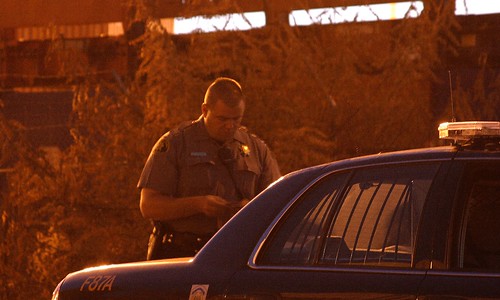 To say I was shocked when I saw the headline that local attorney Mindy Montford was arrested for public intoxication last Saturday is an understatement. Mindy is highly respected and admired in our community and I consider her to be of impeccable character -- she is held in the highest regard by all who know her. I became only more shocked and outraged as I read the story: To say I was shocked when I saw the headline that local attorney Mindy Montford was arrested for public intoxication last Saturday is an understatement. Mindy is highly respected and admired in our community and I consider her to be of impeccable character -- she is held in the highest regard by all who know her. I became only more shocked and outraged as I read the story:
Attorney Pat McNelis, who is law partners with Montford, ... and is representing her, said Montford had been with friends from high school to hear a band at a downtown club. As they were leaving, McNelis said, the driver of a car
in which Montford was a passenger struck a pipe in an alley and was pulled over
moments later. McNelis said Montford got out of the car at that time to “advise her friend of his rights.” He said an officer ordered Montford back into the car, where she sat for about 20 minutes. He said the officer then came back to the car and arrested her, as well as another passenger, on public intoxication charges. He said no further investigation was done before the arrests. “Mindy complied with the officers when they instructed her back to the car,” McNelis said. He said his client “absolutely denies” the charge. McNelis said the driver of the car also was arrested on a drunken driving charge, but that a judge refused to sign a warrant arresting him because of lack of probable cause.
Clearly, this seems to be a retaliatory action by the officer in the worst sense. All too often, we see officers making arrests for public intoxication because the person flunked the "attitude test." Mindy's case seems even more egregious because it appears she was arrested only after advising her friend of his rights. To arrest someone for public intoxication, the officer has to have probable cause that the person was intoxicated in a public place to the degree that the person may endanger herself or another.
I have no doubt that as the case progresses, we will see that not only was Mindy not publicly intoxicated (she was sitting in the back of the car!!!), but that this was done to punish her for doing something the officer did not like -- advising someone of their rights. The outrageous treatment of Mindy only epitomizes how law enforcement reacts when people choose to exercise their Constitutional rights. Unfortunately, this is not an isolated incident. As we have seen all too often, innocent people are arrested for invoking their rights or simply flunking the "attitude test" (thankfully, the criminal justice system usually works as it is supposed to and we are ultimately able to get these kinds of cases dismissed in most instances). This incident only underscores how important it is for us all to know what are rights are in a situation before something like this occurs. If it can happen to Mindy Montford, it can happen to any of us.
(Flickr image via Thomas Hawk)Labels: abuse of power, APD, dwi, public intoxication, rights
posted by Kristin Etter
permalink
youhavetherighttoremainsilentanythingyousaycanandwillbeusedagainstyou - Wednesday, June 10, 2009  By Kristi Couvillon By Kristi Couvillon
I finally took a break from my practice today to read the United States Supreme Court’s decision in Montejo v. Louisiana. I had been dreading reading this opinion as I knew it whittled away our 5th and 6th amendment rights – both to counsel and against self-incrimination.
Obviously, police have always been able to interrogate suspects without lawyers, but, until this decision, police were not allowed to question a defendant who had a lawyer (or who had requested a lawyer) unless that attorney was present. Now, as long as a defendant “waives” his right to counsel, the cops can interrogate that defendant all they want.
You might say, “Well, sure, if they waive that right, they should be able to do whatever they want – the defendant knows what’s best for him.” Well, while it’s debatable whether certain defendants know what is best for them in most situations, this does not take into the account that the police are allowed to lie, trick, or deceive defendants as part of their investigations. (Admittedly, if my loved one was kidnapped, you can bet I’d want cops to use any trick possible to get the kidnapper to tell where my loved one was!) Not to mention, part of what we all learn in childhood is “It’s always best to tell the truth.” “Just come clean and we’ll go easier on you.”
Sounds rational, right? Wrong. Mr. Montejo came clean, told the truth, led the cops to the murder weapon, wrote a letter of apology to the widow of the man he admitted killing, and for his honesty, got the death penalty.
In this case, Mr. Montejo had been brought to court for a hearing and appointed a lawyer. On that same day, before the newly appointed lawyer could make it to jail to meet with his new client, the police met with Mr. Montejo, read him his warnings, and interrogated him which led to the above. The appointed attorney arrived at the jail just as Mr. Montejo and the cops were returning from their murder-weapon-finding-adventure. Understandably, the lawyer was outraged. The case turned on the fact that Mr. Montejo had never asked for a lawyer and that he waived the right to have counsel present.
A big problem I have with this case is that I really don’t think many of my clients understand the Miranda warning: “Youhavetherighttoremainsilent.
Anythingyousaycanandwillbeusedagaisntyouinacourtoflaw.
Youhavetherighttoanattorneypresentduringquestioning.
Ifyoucannotaffordalawyer,onewillbeappointedforyou.
Doyouunderstandtheserights?” What? Never mind that you are nervous, scared, worried, and in a foreign environment with no friendly faces. I’ve had several clients tell me that they didn’t know what that meant and that they thought they were just supposed to say “yes,” cooperate, and do what they’re told.
So, what does this all this mean should you ever find yourself in the hot seat?
1. ALWAYS ASK FOR A LAWYER.
2. DON’T TALK TO THE POLICE. (Save it all for your lawyer; s/he is in a much better place to figure out what, if anything, should be shared with the prosecution or law enforcement.)
3. ASK FOR A LAWYER AGAIN, EVEN IF YOU THINK YOU ALREADY HAVE ONE.
Labels: Miranda, Montejo v. Louisiana, rights
posted by Kristi Couvillon
permalink
Introducting the Sumpter & Gonzalez blog. - Wednesday, June 10, 2009 My name's Dan. I work in the office here at Sumpter & Gonzalez. I work with a number of really brilliant attorneys, but I'm a writer by trade. I've found myself in my time here asking them their opinions on cases in the news, or laws that have passed recently, or things that I've overheard that deal with the law, the police, or the people who've been accused of crimes.
The answers I've gotten have always been insightful, thoughtful, and, above all, knowledgeable. After a few months of trying to talk them into it, the attorneys here have agreed to share some of their thoughts on these things with the rest of the world. I'll be your host here, but they'll be doing most of the writing. Stick around the Sumpter & Gonzalez blog and meet some smart lawyers. Labels: introduction
posted by Dan
permalink
|